Finding an old coin in a drawer or at a flea market can spark a tingle of curiosity: is this worthless pocket change, or something that could pay for a weekend getaway? The truth is rarely mysterious when you know what to look for. This guide walks you through the process of evaluating old coins value so you can distinguish melt value from numismatic worth, spot fakes, and decide whether to sell, get certified, or keep the coin as a keepsake.
What “value” really means for coins
There are two central concepts to keep straight: melt value and numismatic value. Melt value is the bullion worth — what the metal is worth if the coin were melted down. Numismatic value is the premium collectors pay for rarity, condition, demand, historical importance, or unusual errors. A gold coin might be worth at least its gold content; a rare copper or silver issue may be worth a lot more because collectors want it.
Price guides and online listings give references, but they show past or asking prices, not guarantees. Market value changes with trends and new discoveries, and two identical-looking coins can sell for very different prices if one has better eye appeal or documented provenance. Treat any single number as a starting point, not a conclusion.
Quick checklist: What to do first
- Observe the coin without touching it.
- Identify country, denomination, date, and mint mark.
- Weigh and measure carefully — those numbers matter.
- Examine condition with good light and a loupe.
- Research catalogs, auction results, and price guides.
- Decide whether to get third-party grading or a dealer opinion.
Each step tells you something different: the date and mint mark narrow possibilities, weight and size help detect counterfeits or confirm composition, and condition determines the collector premium. Never skip the “look first” step; oils from your fingers can harm coins, especially older or softer metals.
Identify and document the coin
Start with what’s obvious: nation, denomination, and date. Next, find the mint mark — that tiny letter or symbol that tells you where the coin was produced. On many U.S. coins a mint mark like D or S can be very important. Take clear photographs: obverse, reverse, and any edge inscriptions. These photos will help you when searching catalogs or asking for opinions online.
Tools worth having
- 10x jeweler’s loupe
- Digital scale (accurate to 0.01 grams)
- Calipers for diameter and thickness
- Soft gloves or finger cots to avoid oils
- Soft, flat, nonabrasive surface and good lighting
These tools are inexpensive and make the entire process more reliable. Weight and diameter alone can quickly reveal a counterfeit or a coin that’s been altered (for instance, a plated modern coin trying to pass as silver).
Grading: condition matters more than you think
Grading is how collectors express condition. The Sheldon 1–70 scale is the industry standard: 70 means perfect mint state, 1 means virtually destroyed. Grades can be abbreviated (MS, AU, EF/XF, VF, F, G, AG, P), and small differences in grade can mean large differences in value for common dates and especially for rare issues.
| Grade | Label | Quick description |
|---|---|---|
| 60–70 | MS / Mint State | Uncirculated, full luster; higher numbers show increasing perfection |
| 50–58 | AU / About Uncirculated | Very slight wear on the highest points |
| 40–48 | EF / Extremely Fine | Light wear on high points, clear details |
| 20–35 | VF / Very Fine | Moderate wear, major devices still sharp |
| 4–15 | G–F / Good–Fine | Heavier wear, details are flattened |
| 1–3 | AG–P / About Good–Poor | Very worn, date may be barely readable |
Grading is subjective and professionals can disagree, which is why third-party grading services exist. For higher-value pieces, grading can add price certainty. For low-value coins, grading fees may outweigh any increase in sale price.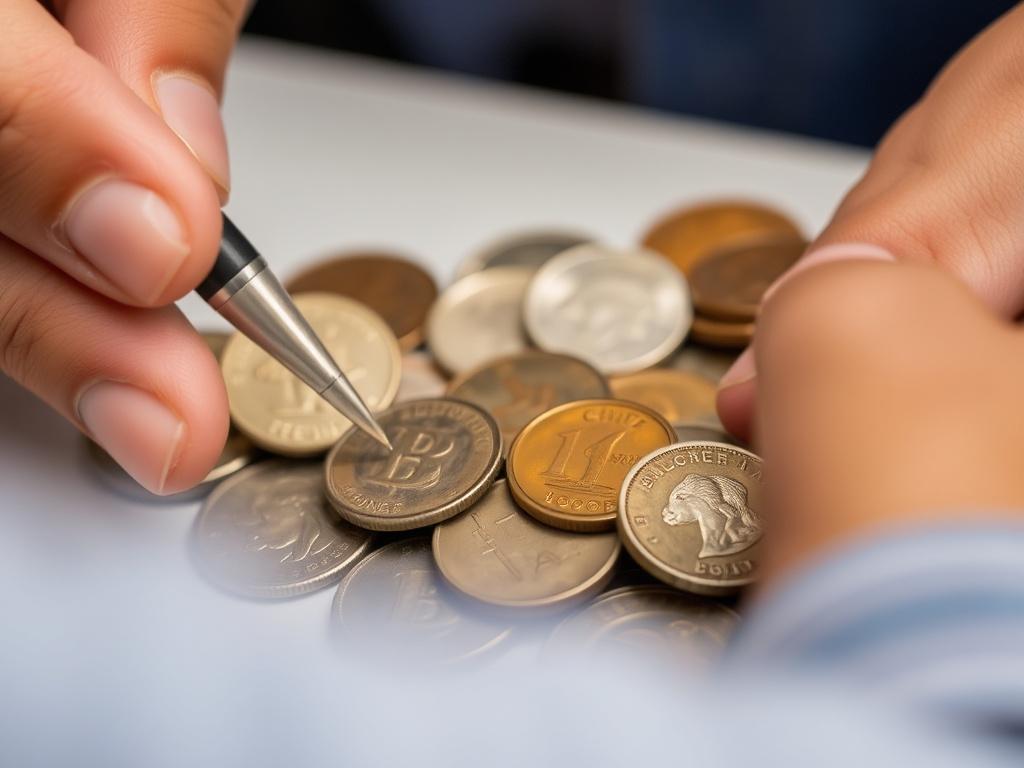
Research: where to look and what to trust
Start with major catalogs and price guides: for U.S. coins, the Red Book (A Guide Book of United States Coins) and online PCGS or NGC price guides are useful. For world coins, Krause catalogs are a standard. Auction houses publish realized prices; look at recent sales for coins of similar date, mint and grade. Online marketplaces like eBay are helpful if you filter for “sold” listings, not current listings.
Specialist forums and collector groups can provide insight on die varieties, minor discovery updates, and local market quirks. But always verify: a single forum opinion should not replace multiple sources or certification when value is significant.
Detecting alterations and counterfeits
Counterfeits have improved. Bad actors plate base-metal coins with silver or gold, shave edges to change weight, or alter dates and mint marks. Red flags include incorrect weight/diameter, obvious seam lines, bubbling of surfaces (plating), or tool marks around dates and mint marks.
- Use a magnet: most silver and gold coins are non-magnetic.
- Compare edge reeding count with references.
- Look for inconsistencies in lettering or design sharpness under magnification.
- Listen test: gold and silver have characteristic ring tones; this is less definitive than measurement but can help with quick checks.
If a coin looks suspicious, avoid buying and seek a professional opinion. For valuable coins, third-party authentication by PCGS, NGC or ANACS is a reasonable step before sale or purchase.
Errors, varieties, and special attributes
Not every anomaly is a fake. Off-center strikes, double dies, repunched mint marks, and cuds can make a coin significantly more valuable. Learning common varieties for the series you collect pays off. For many U.S. series, books and online censuses list known die varieties and their relative scarcity.
When you find an interesting error, document it with multiple photos and measurements. Collectors pay premiums for well-documented, clearly photographed error coins. Auction records for similar errors give a sense of value more reliably than price guides.
Calculating melt value (a simple formula)
Melt value = (coin weight in troy ounces) × (metal purity) × (spot price per troy ounce). Use a digital scale that reports grams, then convert to troy ounces (1 troy ounce = 31.1034768 grams).
| Example coin | Weight (g) | Purity | Convert to troy oz | Melt value formula |
|---|---|---|---|---|
| Typical silver dollar | 26.73 g | 0.900 | 26.73 / 31.1034768 ≈ 0.859 troy oz | 0.859 × 0.900 × (spot $/oz) = melt value |
This shows why sometimes a worn silver coin still has a minimum floor value: the metal alone. But remember that many collectors pay far more than melt for key dates and attractive examples.
Getting an expert opinion and certification
If preliminary research suggests a coin may be valuable, consider third-party grading and certification. PCGS and NGC are the two most widely accepted grading services. Certification provides authentication, a professional grade, and encapsulation that protects the coin. For very rare or expensive coins, provenance and auction house consignment can be a better route.
Before submitting to a grading house, compare the potential increase in market value to the submission fees and turnaround time. For coins under a few hundred dollars, certification usually isn’t cost-effective.
Selling: options and how to choose
Decide how quickly you want to sell and how much control you want over price. Options include:
- Local coin dealer — quick sale, likely lower price than auction or private sale
- Consignment at a reputable auction house — slower, fees apply, but exposes coin to collectors
- Online marketplaces (eBay, Heritage, GreatCollections) — wide exposure; be prepared to document and ship carefully
- Coin shows and clubs — good for face-to-face negotiations and building relationships
For higher-value coins, multiple appraisals are wise. Get offers from a dealer, but also check auction records. A friendly dealer can be an ally, but expect dealers to buy at wholesale prices so they can resell with a margin.
Storage, care, and legal considerations
Proper storage preserves value. Use inert holders or archival flips (avoid PVC), Hard plastic slabs for certified coins, and store humidity-controlled away from direct sunlight. For valuable collections consider a safe or a bank safe deposit box and document the collection for insurance purposes.
Also be aware of legal issues with very old or ancient coins. Some jurisdictions restrict export or sale of cultural heritage items. If you suspect an archaeological find, check local laws before attempting to sell.
Common mistakes to avoid
- Cleaning coins — often destroys collector value.
- Relying on a single price guide or a single online listing.
- Assuming all old coins are rare and valuable.
- Not documenting provenance for high-value pieces.
- Paying certification fees blindly for low-value coins.
Careful observation, measured research, and a willingness to ask for expert help will save you money and disappointment. Coins reward curiosity, not shortcuts.
Resources to keep bookmarked
Build a shortlist of trusted resources: major grading companies (PCGS, NGC), standard catalogs (Red Book, Krause), auction houses with numismatic sales, and active collector forums. Keep a running file of realized auction prices and local dealer contacts. Over time your own notes become one of your best valuation tools.
Conclusion
Checking the value of an old coin is part science, part detective work, and part market savvy. Start by identifying and documenting the piece, measure and inspect carefully, consult multiple references and auction results, and reserve costly authentication for pieces likely to benefit. Avoid cleaning, learn to spot common red flags, and choose the selling route that matches your timeline and tolerance for risk. With basic tools, a few reliable references, and a patient approach, you can separate sentimental trinkets from genuine finds and make informed decisions about what to keep, certify, or sell.